Home › Industrial Floors and Specialty Slabs
Reliable, professional industrial concrete floor in Colorado Springs, CO from Superior Concrete Colorado Springs. Contact us today for a free on-site estimate.
Superior Concrete Colorado Springs provides professional industrial concrete floor throughout Colorado Springs, CO, Colorado and the surrounding area. Our licensed, insured crew delivers safe, clean, on-time work with a free estimate before anything begins. Call (719) 662-3355 or request your free quote.
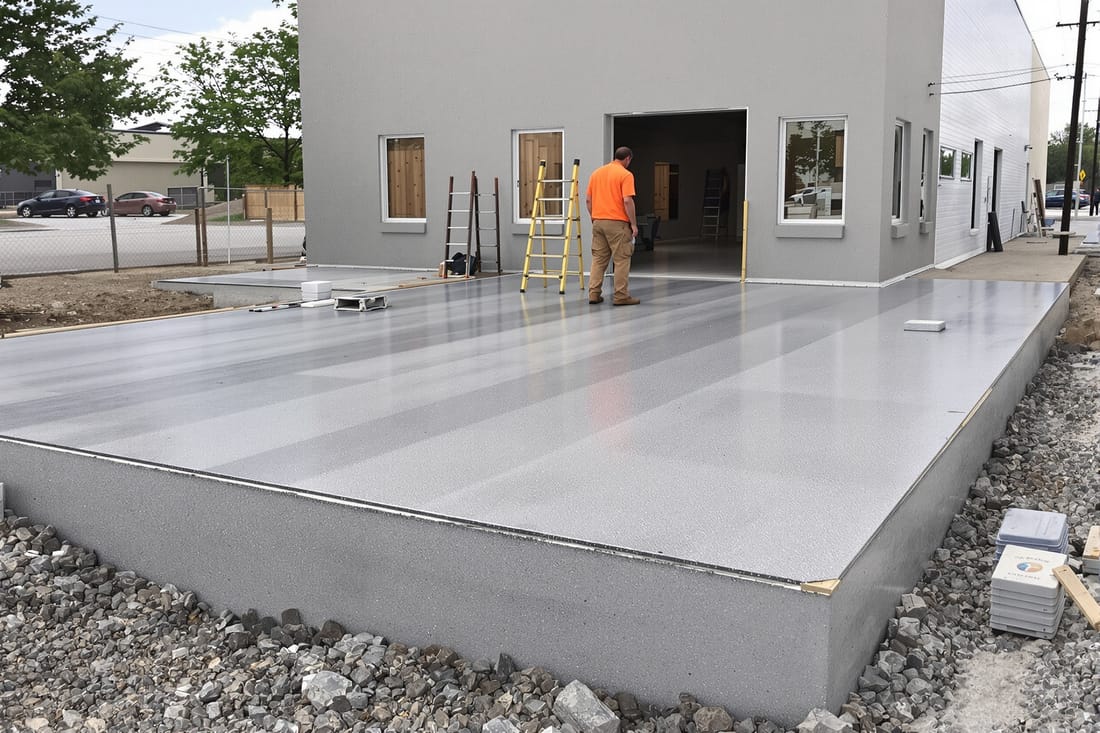
Industrial Concrete Floors Built for Colorado Springs Conditions
Industrial concrete floors in Colorado Springs have to deal with wide temperature swings, forklift traffic, chemical exposure, and sometimes heavy point loads from racking or machinery. Superior Concrete Colorado Springs designs and builds slabs specifically for these conditions, not generic warehouse floors copied from another climate.
Before we bid a project, we look at your exact use: type of equipment, wheel loads, pallet racking layout, whether you expect future machine moves, and what type of finish you need. An industrial floor for a cold storage facility near the airport is designed differently from a manufacturing plant on the east side that uses oil-based coolants or a cannabis grow operation with constant moisture. This upfront analysis drives slab thickness, reinforcement type, joint layout, and surface treatment.
Colorado’s freeze-thaw cycles and low humidity can cause curling, random cracking, and surface dusting if the wrong mix or curing method is used. We work with local ready-mix suppliers to specify air entrainment, low water-cement ratios, and appropriate admixtures that perform well in El Paso County’s climate. Our crews are used to pouring in conditions that change fast during the day, which affects timing for finishing and saw cutting joints.
How We Design Industrial Floors and Specialty Slabs
Superior Concrete Colorado Springs starts with load and use calculations instead of guessing at slab thickness. For heavy racking systems or CNC machines, we review manufacturer specs and, when needed, coordinate with your structural engineer to verify allowable slab deflection and bearing pressure on subgrade.
Design variables include slab thickness (typically 5 to 8 inches for standard industrial use, thicker for very heavy loads), reinforcement strategy (rebar grid, welded wire reinforcement, or structural fibers), subbase type (compacted road base, recycled concrete aggregate, or flowable fill), and vapor control systems for moisture-sensitive flooring. For specialty slabs such as equipment pads, pump bases, and compressor foundations, we incorporate blockouts, anchor bolt locations, and vibration control as needed.
Joint layout is a key part of design. Random cracking often comes from poor joint planning. We map contraction joints to match your rack layout and forklift paths, and for high-performance floors we may recommend doweled joints to transfer loads across panels and reduce edge spalling. For projects that need fewer joints, such as high-bay distribution centers using VNA forklifts, we can use larger panels with steel or macro-synthetic fibers and tighter flatness tolerances.
Our Installation Process, Step by Step
A solid industrial concrete floor starts with proper site prep. We begin by verifying grade and soil conditions, then compact the subgrade to meet project specs, usually 95 percent of Modified Proctor or better. If we find soft spots or expansive clay, we either over-excavate and replace with engineered fill or install a thicker granular base to reduce movement.
Once the base is in, we install a graded aggregate subbase and, if needed, a vapor barrier under slabs receiving epoxy, polished concrete, or other sensitive finishes. Forms and edge details are set to correct elevations, including thickened edge beams or isolated equipment pads. We then place any rebar or welded wire reinforcement on chairs so it stays in the correct position within the slab, not lying on the bottom where it is useless.
Concrete placement is done using laser levels and screeds to meet the flatness and levelness required for your operation. For warehouses using high-reach forklifts, we target tighter FF and FL numbers so you do not fight uneven aisles later. Our finishers use a sequence of bull floating, rest periods, and power troweling timed to the actual set of the concrete, which varies with temperature and wind in Colorado Springs. Control joints are saw cut at calculated spacing and depth as soon as the slab can handle it, usually within 4 to 24 hours, to direct shrinkage cracking where it will be least harmful.
Specialty Slabs: Machine Foundations, Heavy-Load Pads, and More
Specialty slabs typically support loads or uses that standard warehouse floors are not designed for. In Colorado Springs we frequently build equipment pads for manufacturing lines on the Powers corridor, transformer and generator pads for commercial buildings, and thickened slabs for presses, automotive lifts, and heavy storage.
Machine foundations may require deeper sections, double mats of rebar, and embedded anchor systems tied directly to the reinforcement. For vibration-sensitive equipment, we coordinate with engineers to add isolation pads, keyways, or mass blocks that reduce transmission through the building structure. We also create recessed slab areas for pits, docks, and scale foundations, including proper slope and drainage so water does not collect where it should not.
Exterior specialty slabs, like dumpster pads and loading dock aprons, are detailed differently because of de-icing salts and snow removal. We typically use air-entrained concrete, higher-strength mixes, and surface treatments that stand up to truck traffic and plowing. Proper edge thickening and dowels into adjoining slabs prevent settlement at dock doors and keep thresholds from breaking down in a few winters.
Finishes, Surface Treatments, and Repair Options
The right surface finish for an industrial concrete floor depends on how you use the space. Superior Concrete Colorado Springs installs basic hard-troweled floors for standard warehouse use, broom finishes where traction is critical, and more advanced systems such as densified polished concrete or epoxy coatings for clean manufacturing and food processing.
If you plan to polish later, the mix, flatness, and curing method must be chosen with that in mind. We typically use low-shrinkage mixes, tighter flatness tolerances, and curing compounds that are compatible with future polishing rather than film-formers that need heavy removal. For chemical exposure, such as automotive fluids or light acids, we recommend either integral hardeners plus a penetrant sealer or a full epoxy or urethane coating system based on the specific chemicals on site.
For existing industrial floors that have curled joints, spalling, or cracks, we can evaluate whether repair or replacement is more practical. Common repairs include joint rebuilding with semi-rigid epoxies, partial-depth patching at dock areas, and crack routing and sealing to prevent debris infiltration. When a floor has chronic issues from poor original design or bad subbase, we can provide options like section replacement, overlays, or slab-on-slab systems, with an honest explanation of the tradeoffs in cost and downtime.
Cost Drivers, Scheduling, and Local Considerations
Costs for an industrial concrete floor in Colorado Springs are driven mostly by slab thickness, reinforcement type, subbase requirements, finishing tolerances, and any specialty coatings or polishing. Projects with heavy point loads, strict flatness needs, or significant subgrade correction will cost more per square foot than simple warehouse slabs on good soils. We provide line-item estimates so you can see where the money is going, instead of a single lump number you cannot evaluate.
Scheduling matters in this climate. Large placements in summer often start before sunrise to control set time and reduce finishing issues from heat and wind. In colder months we plan for blankets, ground thawing if needed, and adjusted admixture packages so the slab reaches required strength without freezing damage. We also coordinate inspections with Pikes Peak Regional Building Department when permits are required, such as for new commercial structures or substantial alterations to existing buildings.
When you contact Superior Concrete Colorado Springs, be prepared to share your building plans, anticipated equipment and racking, and any future expansion ideas. This allows us to design an industrial concrete floor or specialty slab that supports not just your first year of operation, but how you expect the facility to work five or ten years from now.